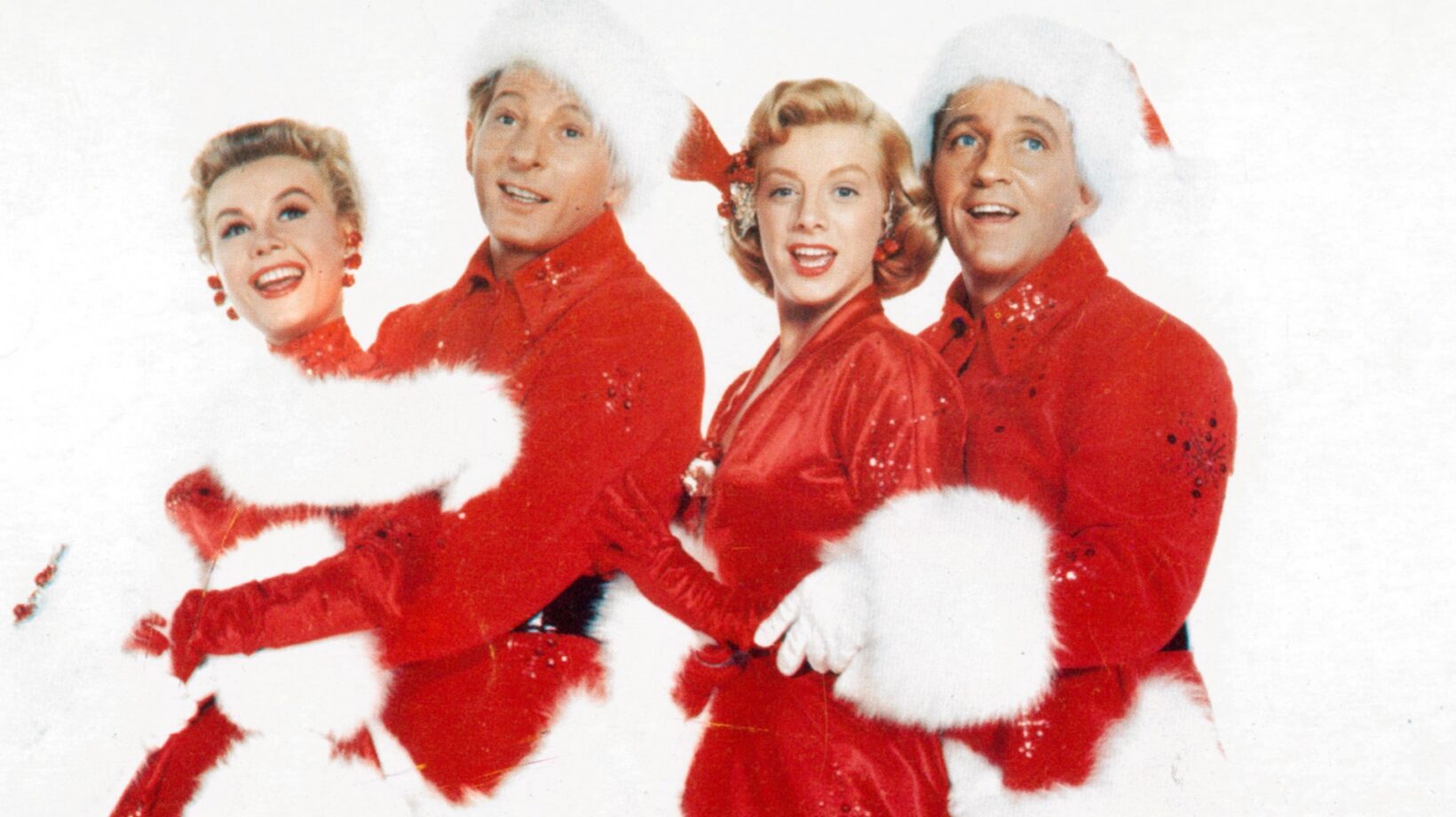
Before White Christmas became a hit 1954 Paramount Pictures musical starring Bing Crosby, Danny Kaye, Rosemary Clooney, and Vera-Ellen, the title was already known as one of America’s most popular Christmas songs.
Written by Irving Berlin, “White Christmas” was introduced by Crosby in the early 1940s, its lyrics of longing connecting with audiences beset with the hardships and separations brought on by World War II. The song’s success inspired Berlin to propose a movie built around the tune, but getting that film made took several years – and multiple casting changes.
Fred Astaire (Top Hat), who costarred with Crosby in Holiday Inn, was originally set to reunite with the crooner for White Christmas. After Astaire exited, Donald O’Connor (Singin’ in the Rain) entered the picture, but Danny Kaye (The Kid from Brooklyn) ultimately lined up opposite Crosby. Directed by Michael Curtiz (Casablanca), the finished movie brought the Berlin-paced, post-war tale to the screen in eye-popping Technicolor and expansive VistaVision.
Here’s how White Christmas, now streaming on Paramount+, went from a smash recording to a holiday movie that we continue to revisit.
Key facts
- Movie: White Christmas (1954)
- Stars: Bing Crosby, Danny Kaye, Rosemary Clooney, Vera-Ellen
- Director: Michael Curtiz
- Music and lyrics: Irving Berlin
- Original theatrical release: October 1954
- Genre: Musical, romance, holiday
- Streaming on demand: Paramount+
What is White Christmas (1954) about?
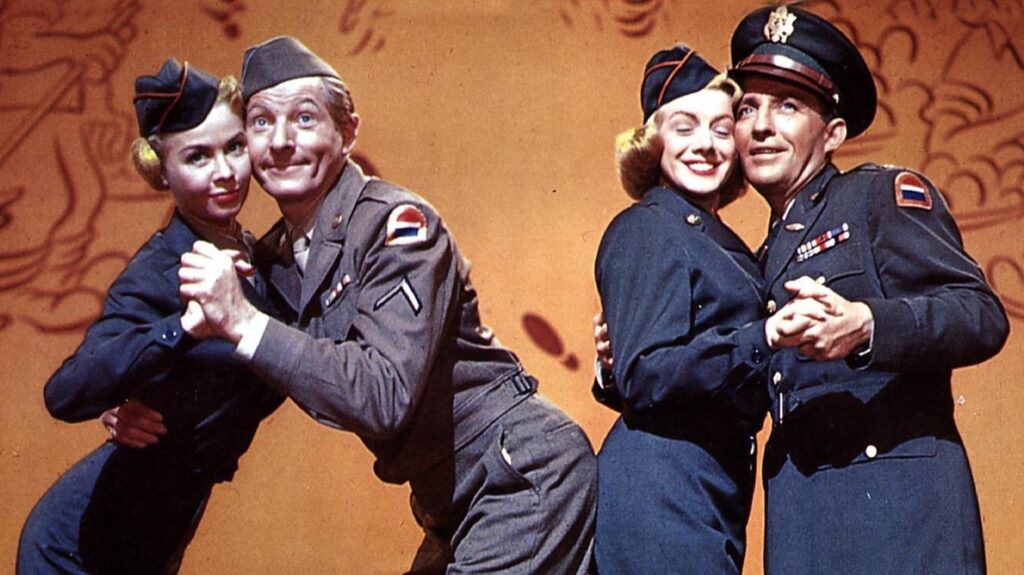
Note to viewers: For maximum enjoyment, it is important to not overthink the plot of White Christmas. Just go with it!
So, the plot! White Christmas is about a famous singer, Bob Wallace (Bing Crosby), who ditches a successful solo career to form a duo with talented, but not-at-all-famous comic, Phil Davis (Danny Kaye), in order to repay a wartime debt.
The pair, known professionally as Wallace & Davis, meet singing sisters Betty (Rosemary Clooney) and Judy Haynes (Vera-Ellen) at a Florida nightclub. Complications ensue, and the two duos flee the situation, arriving at a Vermont hotel where the ever-industrious sisters have a gig. In a twist of screenplay fate, the gang learns the hotel is operated by Bob and Phil’s former commanding officer, the retired Gen. Waverly (Dean Jagger).
Bob and Phil are saddened to see the general’s business struggling because climate change has arrived early in 1950s Vermont: There ain’t no snow! Bob and Phil move to save the day by importing their entire stage show – performers, musicians, sets, set-builders, stagehands, costumes, wardrobe assistants, and all – to the general’s place, a mountain hideaway that apparently boasts a performance space as vast and accommodating as Radio City Music Hall. Oh, and the sisters that Bob and Phil met roughly 24 hours earlier? Why, they’re cast in starring roles! See, not only are Betty and Judy talented, but Bob is smitten with Betty and Phil is smitten with Judy (except when he’s scared of her). More complications ensue, and Bob and Phil decide it’s not enough to stage a full-tilt-boogie show – they’re going to invite all the vets of Gen. Waverly’s 151st Division to Vermont, too!
By the by, do you happen to know how many soldiers were in a typical U.S. Army division in World War II? About 10,000. But, hey, it’s all good. It turns out the humble Columbia Inn, staffed, as far we can see, by one housekeeper, one handyman (aka Waverly), and one presumably part-time teenaged staffer (aka Waverly’s granddaughter), can totally handle the crush!
The movie ends happily before Bob and Phil can get blamed for overwhelming a rustic inn with thousands of visitors and their tonnage of bags, props, and what-not. The end!
How did Irving Berlin’s song inspire the White Christmas movie?
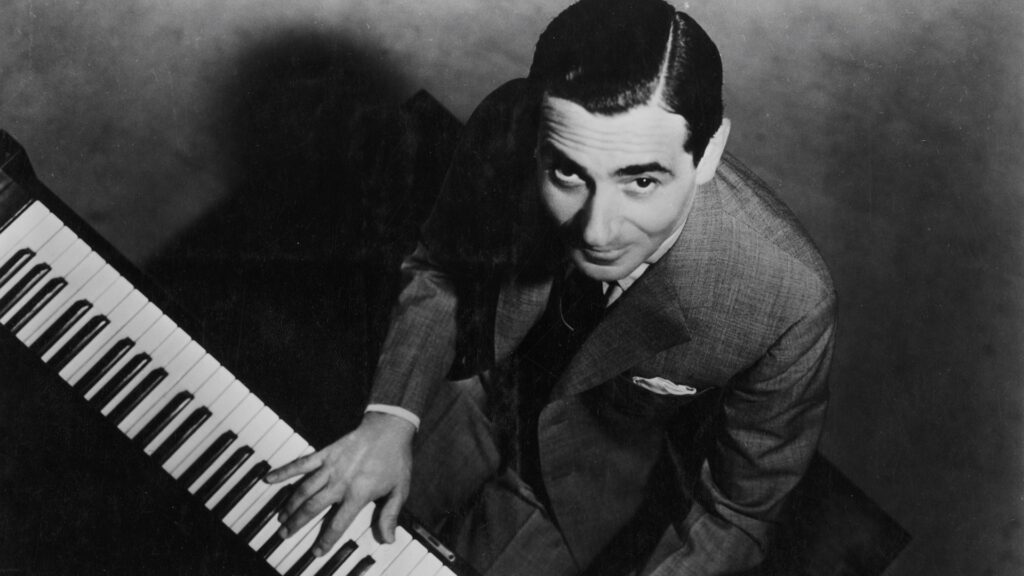
The story of White Christmas begins more than a decade before the movie’s 1954 release.
Composer Irving Berlin (“God Bless America”) wrote “White Christmas” circa 1940-1941. According to CBS News’ history of the song, Berlin had worked on the composition while living in California, where he reportedly missed his family and New York.
Crosby introduced the song on his radio program during Christmas 1941, shortly after the attack on Pearl Harbor. He subsequently crooned it in the 1942 musical Holiday Inn, starring Crosby and Fred Astaire. The tune went on to sell millions of records, and win the Academy Award® for original song.
By 1948, Berlin got to thinking about “White Christmas” as the jumping off point for a movie, and not just a song in a movie. According to a 1953 report in The New York Times, Berlin proposed a White Christmas project to Paramount, which subsequently brought in screenwriter Norman Krasna to develop a story.
How did the cast come together?
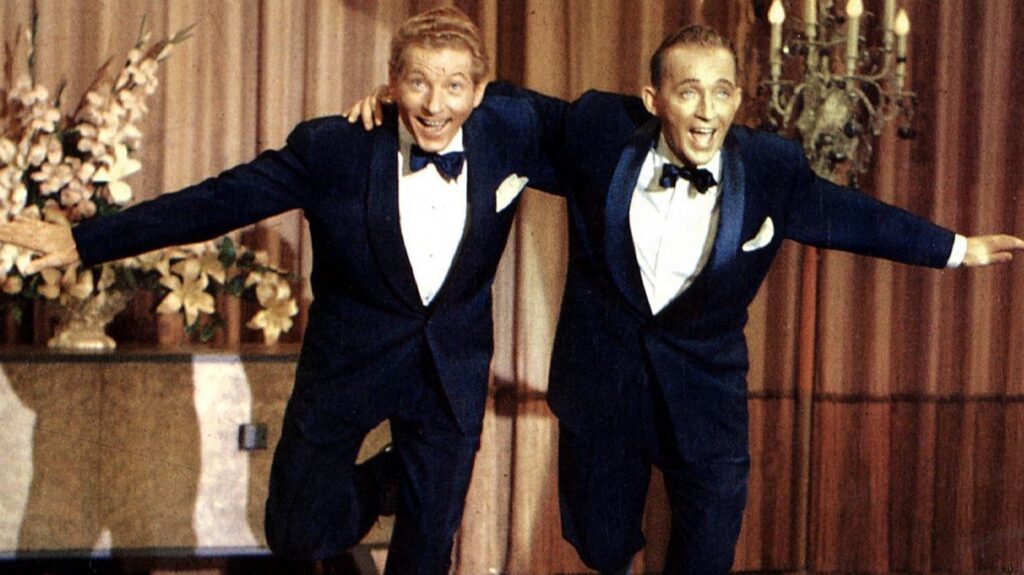
Bing Crosby, the singer synonymous with “White Christmas,” was attached to the White Christmas movie from the project’s early stages. Finding Crosby’s on-screen partner, however, proved more complicated.
Paramount originally planned to reunite Crosby with Fred Astaire, his costar in 1942’s Holiday Inn and 1946’s Blue Skies.
In 1952, The New York Times reported that Paramount had secured Astaire. But Astaire, who’d already flirted with Hollywood retirement in the 1940s, would withdraw from the production. Donald O’Connor was selected to replace him, but he fell ill before filming began. Enter Danny Kaye.
Age 43 at the time of White Christmas‘ release, Kaye assumed the role of Phil Davis, to Crosby’s Bob Wallace. Crosby, if you’re keeping score at home, was 51.
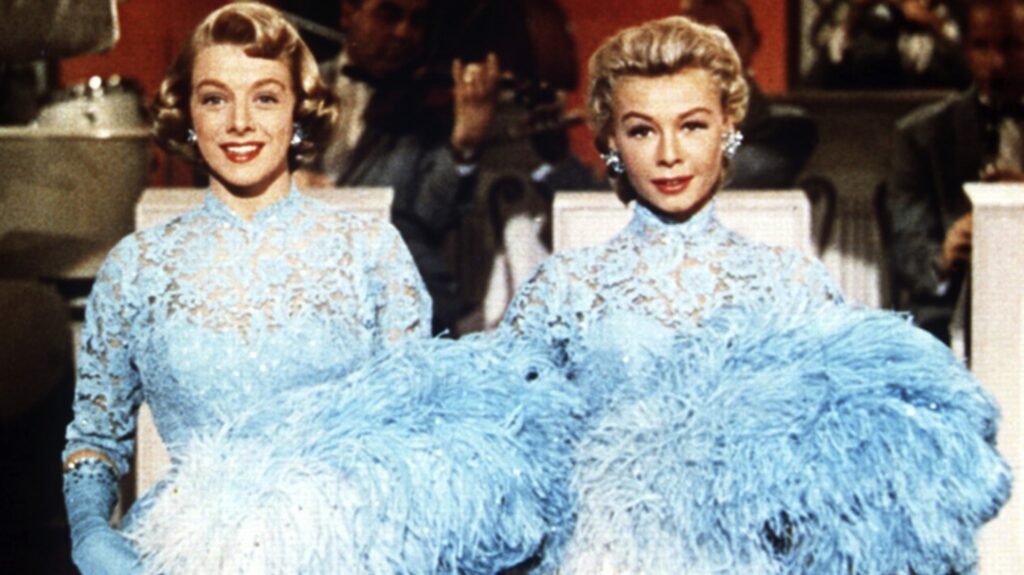
Rosemary Clooney and Vera-Ellen, meanwhile, were cast as Betty Haynes and Judy Haynes, respectively, the singing sisters who wow Bob and Phil. Clooney, 26, was primarily a pop-jazz singer (“Come On-a My House”) who dabbled in film, and would one day be known as the aunt of George Clooney. Vera-Ellen, 33, was a dancer turned movie-musical star who’d worked with Kaye on 1945’s Wonder Man.
Dean Jagger, 51, the same age as Crosby at the time of the film’s release, was cast as Gen. Waverly, Bob and Phil’s former Army commander whose struggles in a snow-bereft Vermont encourage the gang to put on a show. Jagger and Crosby shared something else besides a common age: They were both Oscar® winners.
Mary Wickes, 44, the always-working character actress, best known to modern audiences for her role as Sister Mary Lazarus in the Sister Act movies, scored the role of Emma, the Columbia Inn’s nosy housekeeper.
With the cast in place, filming began in the fall of 1953 under director Michael Curtiz, a two-time Oscar® winner.
What went into the music of White Christmas?
The music of White Christmas starts, and ends, with Irving Berlin’s “White Christmas.” Bing Crosby’s Bob Wallace sings the song in the film’s opening minutes, and the ensemble sings it multiple times in the film’s closing minutes. So, if that’s the song you’re expecting to get, White Christmas does not disappoint.
Irving Berlin, however, wasn’t invariably described as “the prolific Irving Berlin” for no reason. The man could crank out the tunes. According to The New York Times’ 1953 account of the production, White Christmas was slated to boast 17 musical numbers (all by Berlin, natch), including 12 new songs (all by Berlin, natch).
The New York Times report describes Berlin as being nervous when previewing his White Christmas songs for Crosby. The crooner cut short the tension by asking Berlin, “Do you like them, Irving?” Berlin indicated he did – and Crosby said that was good enough for him.
Here’s a rundown of the song list from White Christmas:
- “White Christmas”
- “The Old Man”
- Medley: “Heat Wave”/”Let Me Sing and I’m Happy”/”Blue Skies”
- “Sisters”
- “The Best Things Happen While You’re Dancing”
- “Sisters” (reprise)
- “Snow”
- Medley: “I’d Rather See a Minstrel Show”/”Mister Bones”/”Mandy”
- “Count Your Blessings Instead of Sheep”
- “Choreography”
- “The Best Things Happen While You’re Dancing” (reprise)
- “Abraham” (instrumental)
- “Love, You Didn’t Do Right By Me”
- “What Can You Do With a General?“
- “The Old Man” (reprise)
- “Gee, I Wish I Was Back in the Army”
- “White Christmas” (reprise)
“Count Your Blessings Instead of Sheep,” a duet in the film for Crosby and Rosemary Clooney, earned an Oscar® nomination for original song. (It lost to “Three Coins in the Fountain,” by Jule Styne and Sammy Cahn.)
With the exception of a choral number, “The Old Man,” Crosby, Clooney, Danny Kaye, and Trudy Stevens (dubbing for Vera-Ellen) provide the vocals throughout.
Is Holiday Inn the same as White Christmas?
No, Holiday Inn is not the same as White Christmas. Oh, no, no, no, no, no. Now, we suppose it’s easy to conflate the two movies, released 12 years apart: They’re both musicals, about show-biz folks, starring Bing Crosby, and featuring the song “White Christmas,” along with other tunes by Irving Berlin. But they’re separate, distinct movies: White Christmas is not a remake of Holiday Inn.
Also, White Christmas, released during the early days of the civil rights movement, does not feature Crosby in blackface, which, um, Holiday Inn does (in a sung tribute to President Lincoln, “Abraham,” a song which also shows up in White Christmas, albeit as an instrumental). So, yeah, there’s that difference, too.
How was White Christmas received when it premiered?
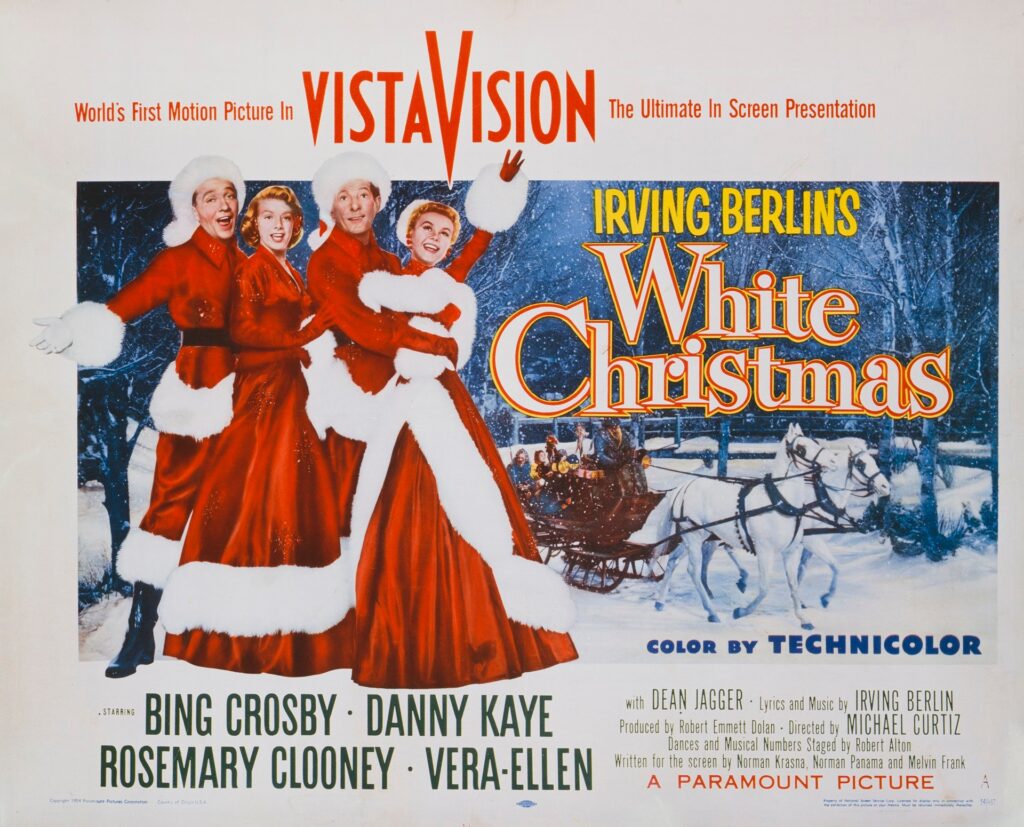
White Christmas opened at New York City’s Radio City Music Hall in October 1954. In his review, New York Times critic Bosley Crowther praised the movie’s visual presentation – the Technicolor! the VistaVision! – but overall found the film lacking. “Director Michael Curtiz has made his picture look good,” Crowther wrote. “It is too bad that it doesn’t hit the eardrums and the funnybone with equal force.”
Alas for Crowther, the movie went on to become the biggest box-office hit of 1954, and score a Certified Fresh™ designation on Rotten Tomatoes. The latter distinction, of course, wasn’t a thing during the Eisenhower Administration, but nonetheless, respectfully take that, Bosley Crowther!
Why is White Christmas still a holiday classic?
If we had a dollar for every time we’ve watched White Christmas, we’d have about $50! Not bad, right? So, why do we watch White Christmas, year after year? Probably for many of the same reasons other viewers have made Bob, Phil, Betty, and Judy, part of their regular Yuletide crew. Let’s take a look at our highly subjective list.
White Christmas is still a holiday classic because …
- It’s fun!
- It’s fun to poke gentle fun at!
- Rosemary Clooney is a delight! She’s such a natural, easy presence on the screen. After each watch, we always end up wishing she’d made more movies.
- “Sisters.” A wonderful number by Clooney and Vera-Ellen (who sells it, even if she doesn’t sing it). The goof version, with Bing Crosby’s Bob and Danny Kaye’s Phil lip-syncing to the Haynes sisters’ recording, is indeed a goof, but it doesn’t detract from the magic that comes earlier.
- Edith Head’s costume work is stunning. Our two favorite numbers: (1) Danny Kaye’s gray suit, with matching socks and shoes, in the Florida nightclub sequence. (2) Rosemary Clooney’s sleeveless black gown in the New York nightclub scene (which occurs after Betty dumps Bob, hops on a train to New York City, and, basically by nightfall, launches a new nightclub act, complete with dancers — again, just go with it).
- Bosley Crowther had a point: The picture does look good!
- It’s not Holiday Inn!
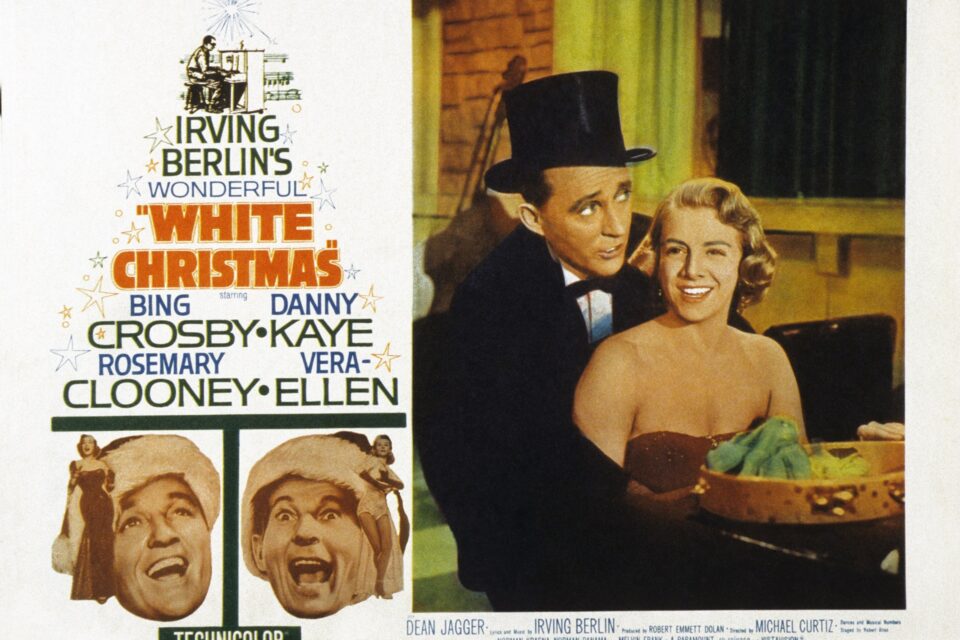
White Christmas (1954)
Watch NowTitle subject to availability.