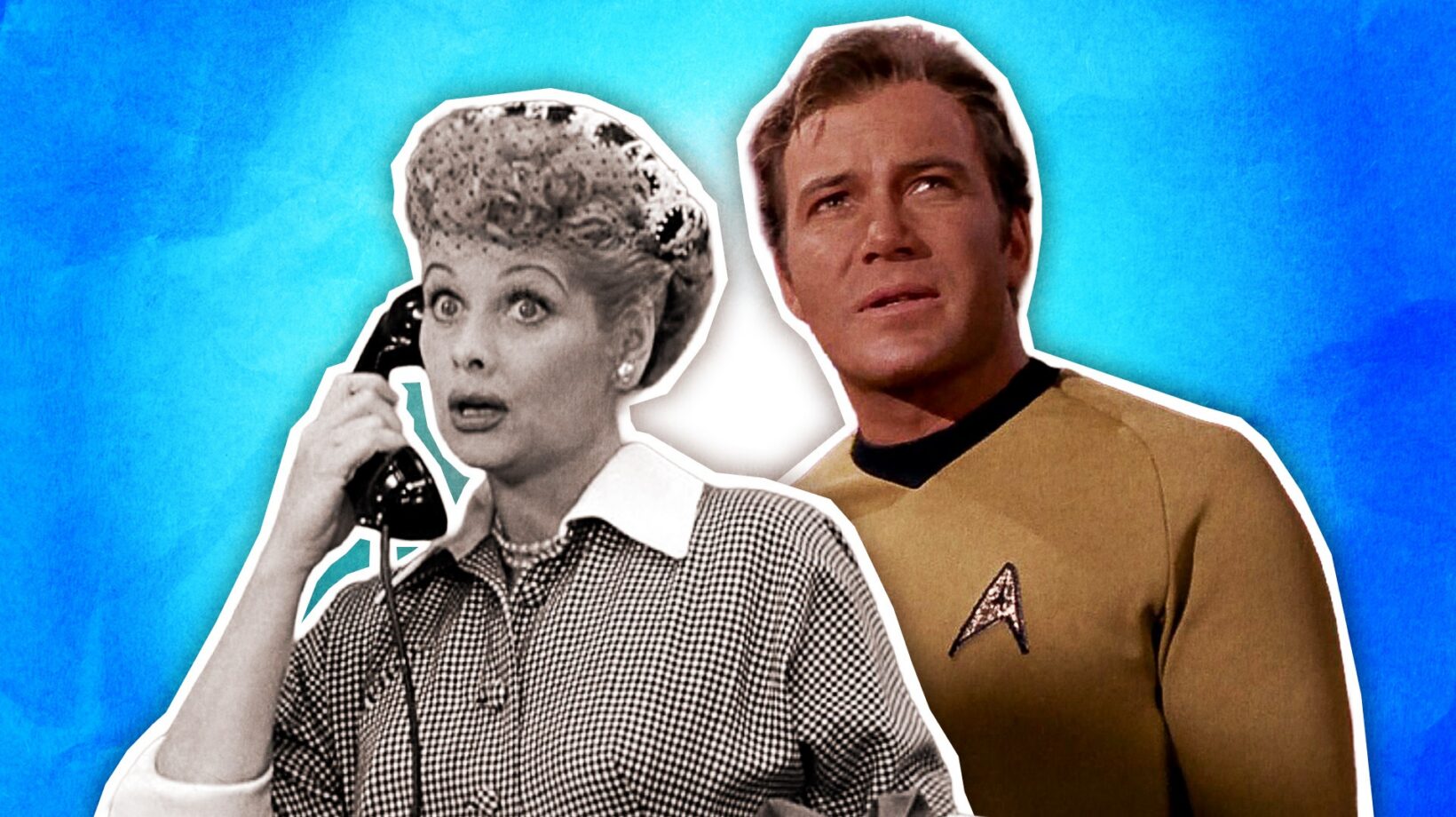
As Star Trek celebrates its 60th anniversary in 2026, there’s another TV legend worth remembering: Lucille Ball.
Star Trek marks 60 years on Star Trek Day, Sept. 8, 2026, six decades after the original Star Trek TV series premiered on NBC. Long before the show became a sci-fi institution, however, Gene Roddenberry’s idea needed a studio willing to take a chance on it. That studio was Desilu Productions, then run by Ball. StarTrek.com credits Ball and Desilu with helping bring the original series to life. and backing the project through two pilots.
Ball is best known as the star of I Love Lucy, but her television legacy extends far beyond the sitcom. Her role at Desilu put her at the top of the company that helped develop Star Trek and gave the series the opportunity to make it to television.
Key facts
- Lucille Ball took over Desilu Productions following her 1960 divorce from Desi Arnaz, and bought out his stake in the company in 1962.
- Gene Roddenberry brought the idea that became Star Trek to Desilu in 1964.
- Desilu produced the original Star Trek pilot, “The Cage,” starring Jeffrey Hunter as Capt. Christopher Pike and Leonard Nimoy as Spock.
- After NBC declined to order the series from “The Cage,” Star Trek got the rare opportunity to make a second pilot.
- The second pilot, “Where No Man Has Gone Before,” starred William Shatner as Capt. James T. Kirk, with Nimoy returning as Spock.
- NBC ordered Star Trek to series in 1966.
- “The Man Trap” was the first Star Trek episode broadcast on NBC, airing Sept. 8, 1966. “Where No Man Has Gone Before,” the second pilot, aired later in the season.
- Ball sold Desilu in 1967, during Star Trek‘s original run.
- You can stream both Star Trek pilots, “The Cage” and “Where No Man Has Gone Before,” on Paramount+.
- The original Star Trek series and I Love Lucy are both available to stream on Paramount+.
What did Lucille Ball have to do with Star Trek?
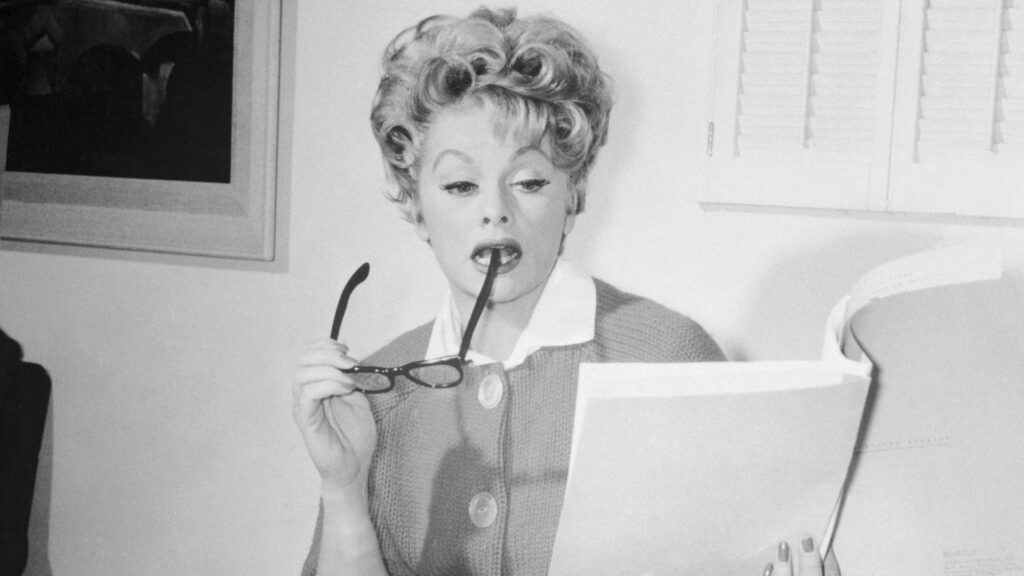
Lucille Ball’s connection to Star Trek came through Desilu Productions, the television production company she founded in 1950 with her then-husband and I Love Lucy costar, Desi Arnaz.
After Ball and Arnaz divorced in 1960, Ball took over the studio. In 1962, she bought out Arnaz’s interest in the company. By the time Gene Roddenberry brought his idea for Star Trek to Desilu in 1964, Ball was running the studio.
Ball wasn’t a writer or producer on Star Trek, and she didn’t create the series — Roddenberry did, of course. Ball’s importance was at the studio level: Star Trek was developed and produced by Desilu while she was running the company. Desilu executive Herbert F. Solow played a central role in developing Star Trek and making the deal with NBC.
How did Desilu Productions help launch Star Trek?
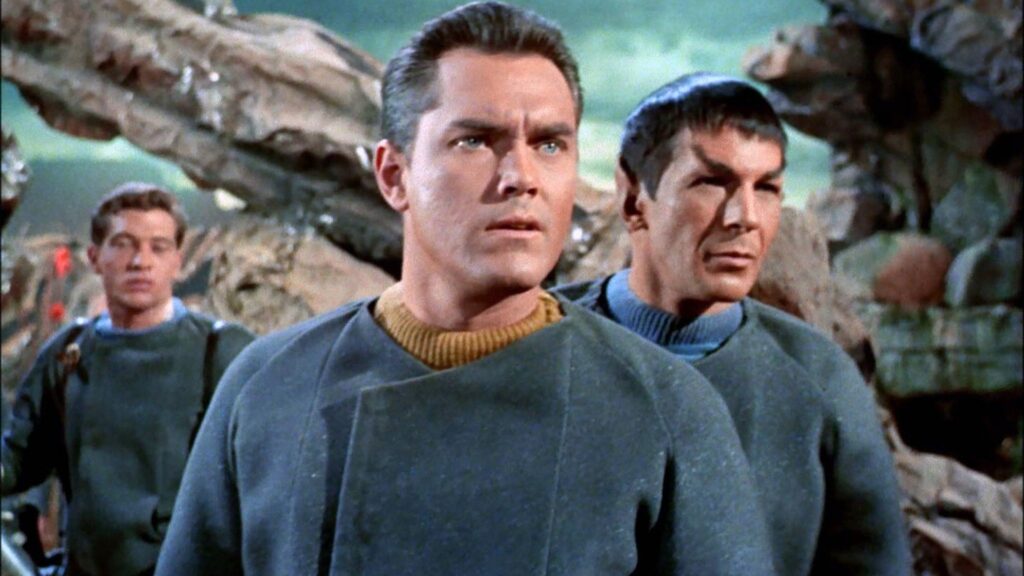
Desilu Productions gave Star Trek the studio backing it needed to go from Roddenberry’s concept to an actual television pilot.
Ball and Arnaz built Desilu during the success of I Love Lucy. By the 1960s, the company was taking on ambitious television projects beyond Ball’s comedies. Its shows would include Star Trek and Mission: Impossible.
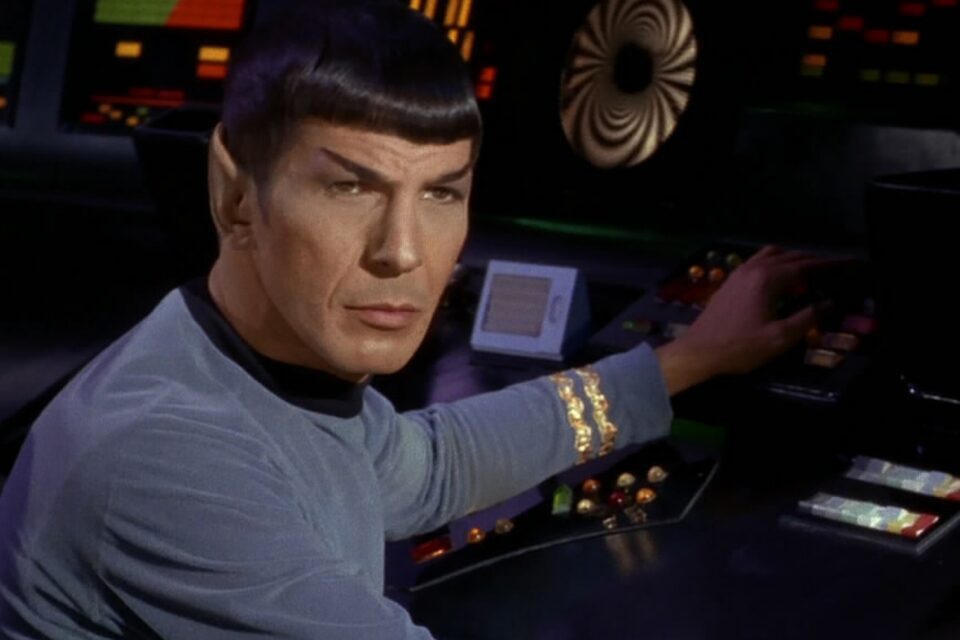
Desilu backed Star Trek‘s first pilot, “The Cage.” In it, Jeffrey Hunter stars as Capt. Christopher Pike, commander of the U.S.S. Enterprise, while Leonard Nimoy plays Spock.
NBC declined to order Star Trek to series based on “The Cage.” Ordinarily, that might have ended the project. Instead, Star Trek received a second chance.
Why did Star Trek get a second pilot?
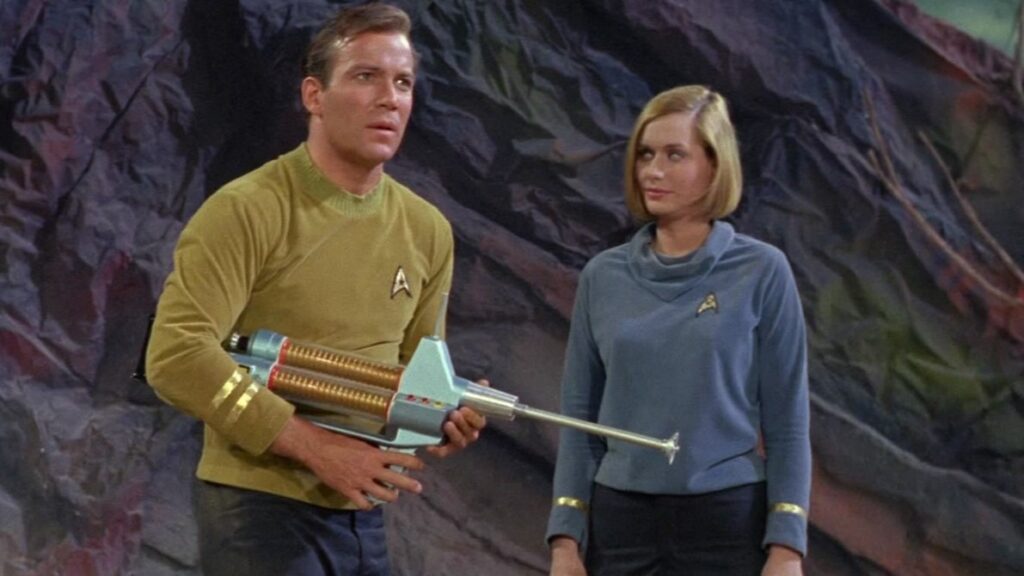
After passing on “The Cage,” NBC commissioned a second Star Trek pilot, giving Desilu and Gene Roddenberry an opportunity to rework the series. “Getting a second pilot was enormously rare,” Desilu executive Herbert F. Solow told Woman’s World. “If a pilot didn’t work the first time, the networks said, ‘Oh, forget it; it’s over.’ … But we got the second pilot.”
StarTrek.com credits Ball’s support as an important reason Star Trek survived its first rejection. In a 2023 look at the Ball-Star Trek connection, the official site says Ball stood behind the project despite the expense, and resistance within Desilu.
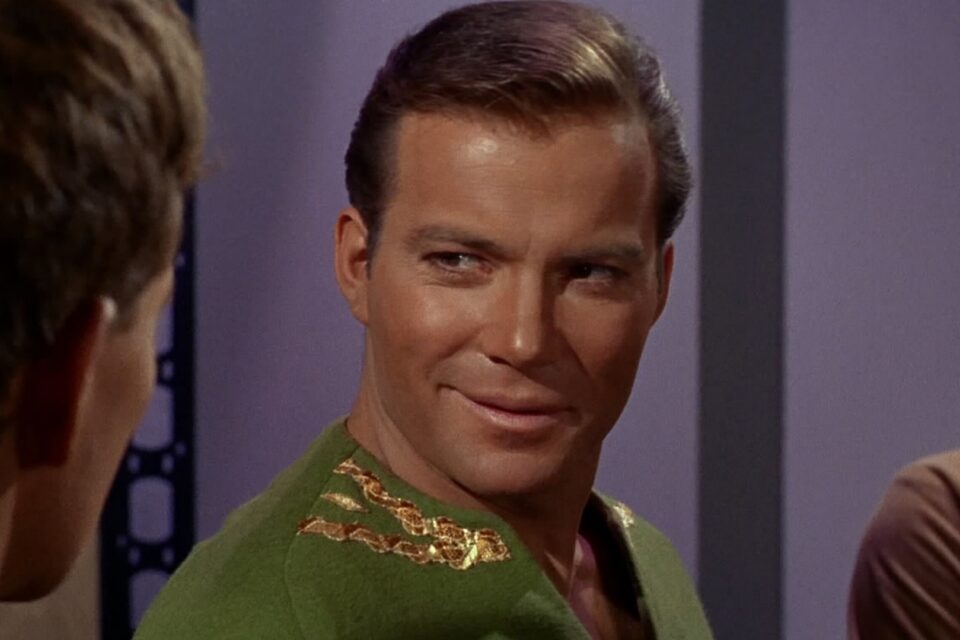
The second pilot, “Where No Man Has Gone Before,” returned Leonard Nimoy as Spock, and introduced William Shatner as Capt. James T. Kirk. Future Oscar® nominee Sally Kellerman (M*A*S*H) guest starred. The new approach worked. NBC greenlit Star Trek, setting the stage for the television show that would grow into an iconic franchise.
Fans can watch all this history for themselves. Along with dozens of Star Trek shows and movies available to watch on demand on Paramount+, both Star Trek pilots are streaming on the service, too: “The Cage” is listed as Season 1 Episode 1 of the original series, while “Where No Man Has Gone Before” is Season 1 Episode 4. (And, if you really want to do a pilot deep dive, then watch “The Menagerie , Part I” and “The Menagerie, Part II“, Season 1 Episode 12 and Episode 13, respectively, too. The original series’ only two-parter, first aired in November 1966, used footage from “The Cage” to help frame the story.)
Did Lucille Ball really save Star Trek?
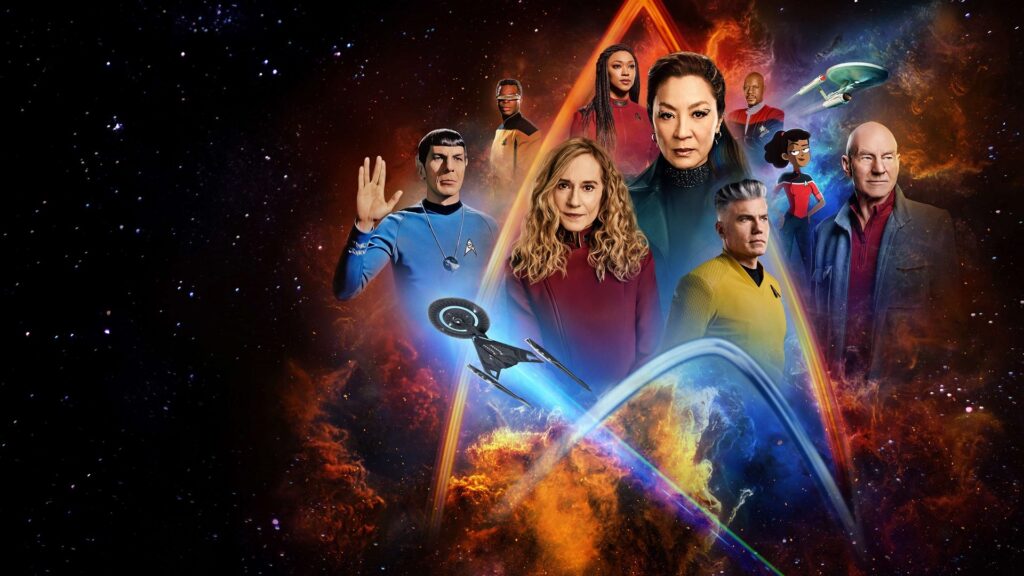
Lucille Ball helped make Star Trek possible, but saying she single-handedly “saved” the series simplifies a story involving Ball, Desilu’s executives, Gene Roddenberry, and NBC.
StarTrek.com gives Ball substantial credit. The site’s account says she supported Roddenberry’s vision despite resistance from some members of the Desilu board. The site goes on to argue that without Ball’s reputation and support, “The Cage” could have been the end of Star Trek.
But Ball wasn’t developing scripts, casting the Enterprise crew, or handling negotiations with NBC. Herbert F. Solow and other Desilu executives were directly involved in those parts of the show’s development.
So, did Lucille Ball save Star Trek? Did her actions spur all that followed? The most accurate answer is that Ball’s leadership and Desilu’s backing helped give Star Trek the second chance it needed to become a TV series – and, eventually, a franchise. She wasn’t the show’s creator, but she led the studio that took the risk.
What happened to Desilu and Star Trek?
Star Trek premiered on NBC on Sept. 8, 1966. Sixty years later, that date is celebrated as Star Trek Day, with the franchise officially marking its 60th anniversary on Sept. 8, 2026.
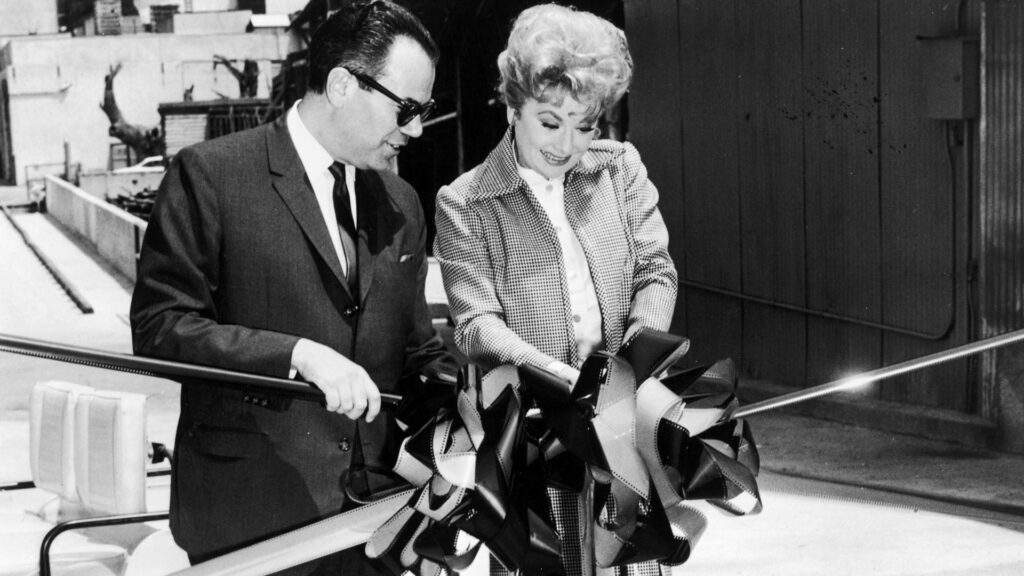
Desilu changed hands during the show’s original run (from 1966-1969). Ball cut the ribbon on a deal in 1967 to sell her company to Gulf+Western. Desilu and its library of TV hits ultimately became part of Paramount Pictures (which Gulf+Western had purchased a year prior to buying Desilu).
This history helped establish the relationship between Star Trek and Paramount that continues today. Paramount+ is the streaming home of Star Trek.
Where can you watch Star Trek and Lucille Ball?
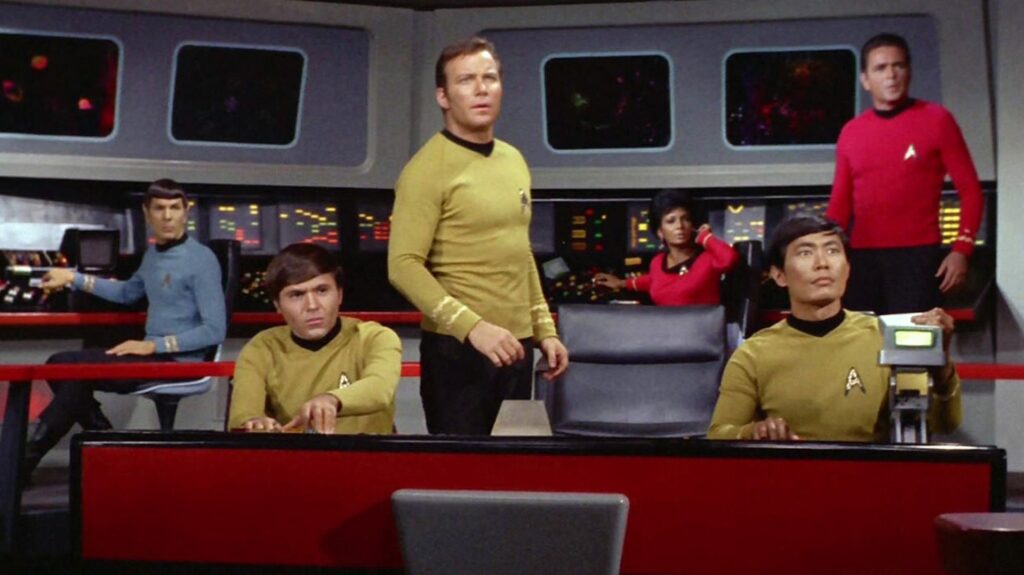
You can stream the original Star Trek series on Paramount+, including the two pilots at the center of the Lucille Ball-Desilu story, “The Cage” and “Where No Man Has Gone Before.”
Start with “The Cage” (listed as Season 1, Episode 1) to see Jeffrey Hunter’s Capt. Christopher Pike command the Enterprise alongside Leonard Nimoy’s Spock. Then watch “Where No Man Has Gone Before” (Season 1, Episode 4) to see William Shatner take the wheel, as it were, as Capt. James T. Kirk, with Nimoy returning as Spock. Paramount+ includes both episodes in Season 1 of the original Star Trek series.
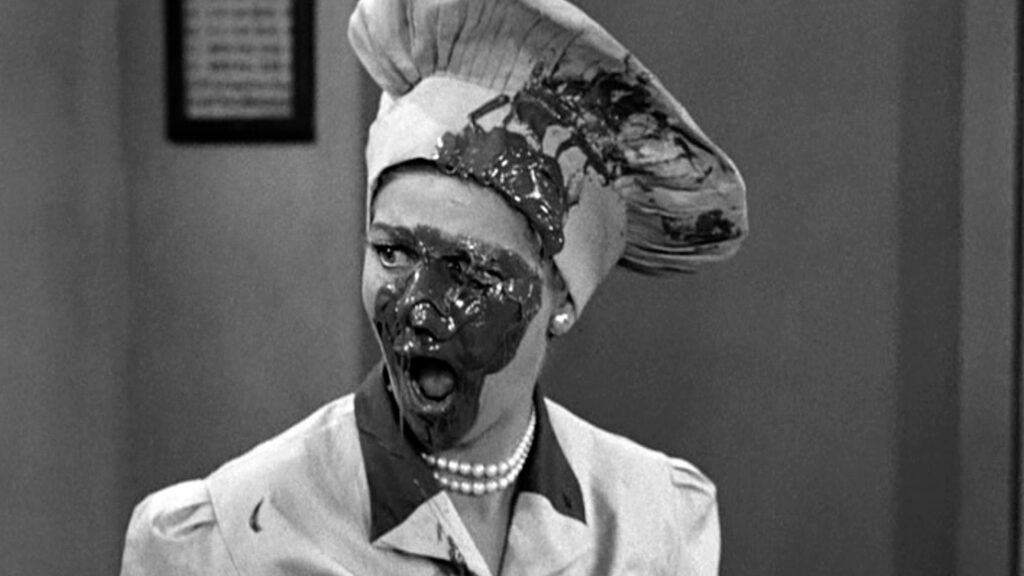
I Love Lucy is also available on Paramount+, making it possible to watch the sitcom most closely associated with Ball alongside the sci-fi series her studio helped bring to television.
Six decades after Star Trek first reached viewers, a universe-crossing, Star Trek–I Love Lucy binge-watch is a fitting (and fun!) way to revisit Lucille Ball’s less familiar place in its history. Watch the show that helped build Desilu’s reputation, then watch the two Star Trek pilots that helped launch a 60-year franchise.
WATCH NOW: I Love Lucy
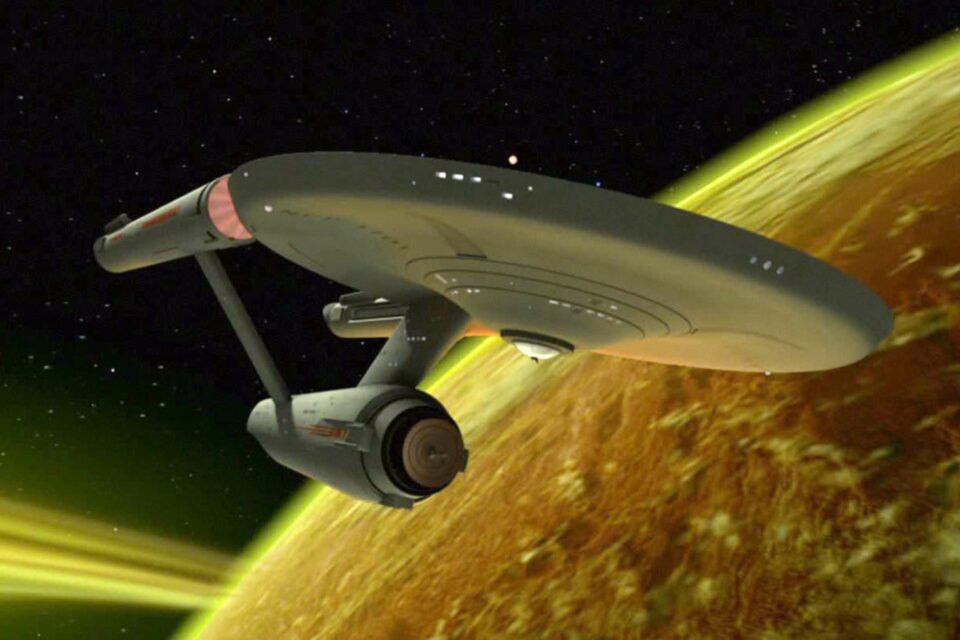
The Star Trek Collection
Watch Now