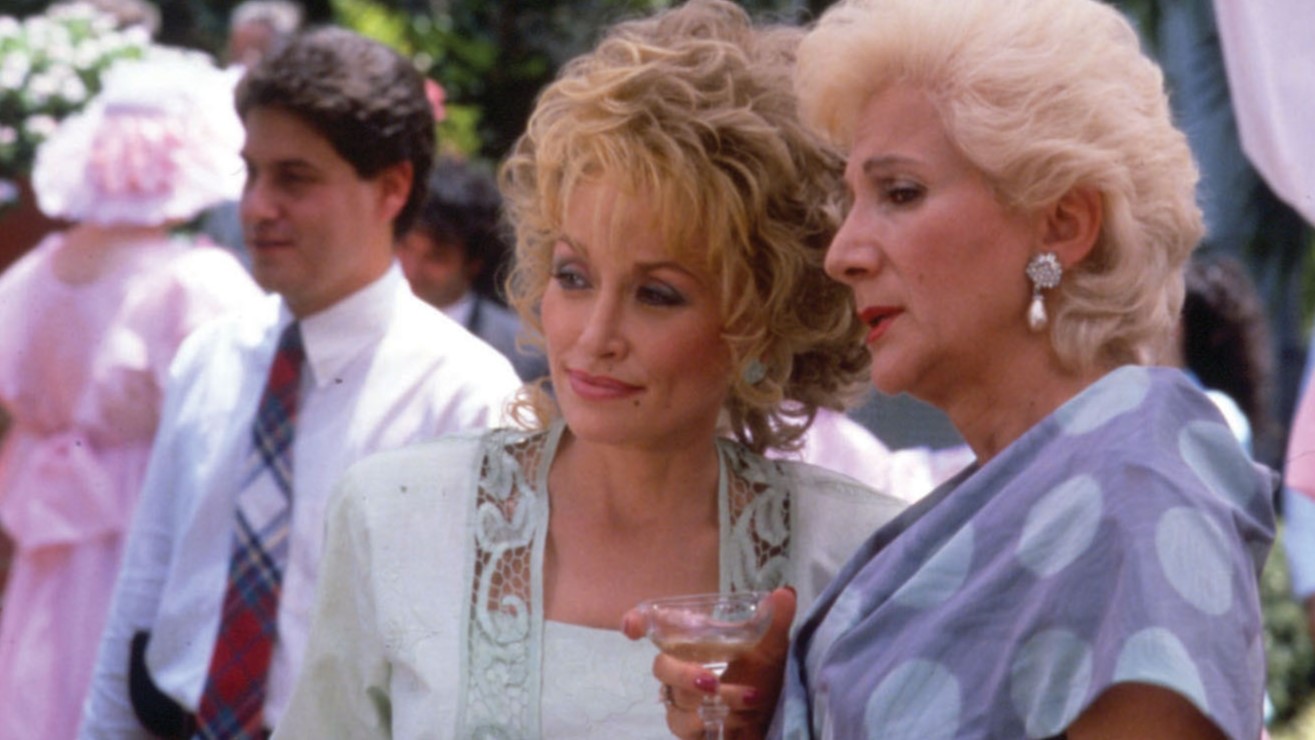
You could say Steel Magnolias is not the quintessential Dolly Parton movie. You could say it’s not even really “a Dolly Parton movie” – the 1989 film, though an ensemble piece, rests on the modest shoulder pads of Sally Field. But it is a movie with Dolly Parton in it. And any chance to see her light up the screen like a ray of sunshine is reason enough to watch.
Parton, the singer-songwriter-actress who seemingly made the spreading of light and joy another of her full-time roles, died Tuesday at the age of 80. Among her considerable credits, she leaves behind an iconic songbook of country and pop classics (“I Will Always Love You,” “Jolene”), a theme park (Dollywood), a children’s charity (The Dollywood Foundation) – and, starting with 9 to 5, nearly a dozen on-screen film performances.
In their day, Parton’s films rarely clicked with critics, even if her performances could still charm audiences. 1980’s 9 to 5, Parton’s breakthrough role, was one unconditional success, and, bookending the decade, Steel Magnolias was the other.
If 9 to 5 proved Parton could do farcical comedy and hold her own beside Jane Fonda and Lily Tomlin, then Steel Magnolias proved she could do heartrending drama and hold her own amongst Field, Shirley MacLaine, Olympia Dukakis, Daryl Hannah, and, in her breakthrough role, Julia Roberts.
In Steel Magnolias, Parton plays Truvy Jones, a self-styled “glamour technician” who believes “there is no such thing as natural beauty.” It’s a good line from Parton’s unshrinking violet, and as you listen to Truvy dispense advice along with spritz, you start to suspect there is such a thing as a heart of gold.
It wouldn’t be right to argue that there’s not enough Parton in Steel Magnolias. Truvy’s home-based salon, after all, is located in the heart of the movie’s fictional parish, and is the setting for some of the story’s most dramatic moments. (See: “Drink your juice, Shelby.”) There’s also the matter of Steel Magnolias‘s ensemble: It’s fantastic. This is a movie we love because of its abundance of talented actors and memorable performances. (See, again: “Drink your juice, Shelby.”) And while we could argue there’s not enough Parton in movies in general, we don’t think Ms. Parton would want us to argue at all.
So, let’s simply pause to remember one of the great ones, and appreciate Steel Magnolias for the comfort watch that it is – and for the pitch-perfect Dolly Parton showcase it will always be.
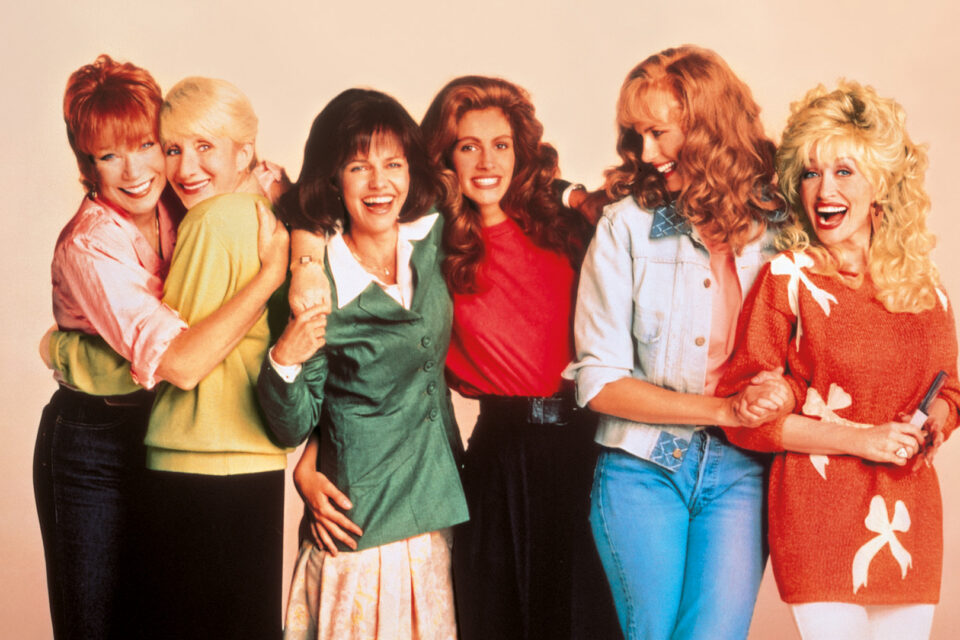
Steel Magnolias
Watch Now